
This manual provides essential information for operating and maintaining your 2004 Jeep Grand Cherokee, ensuring safe and enjoyable driving experiences.
Overview of the Vehicle
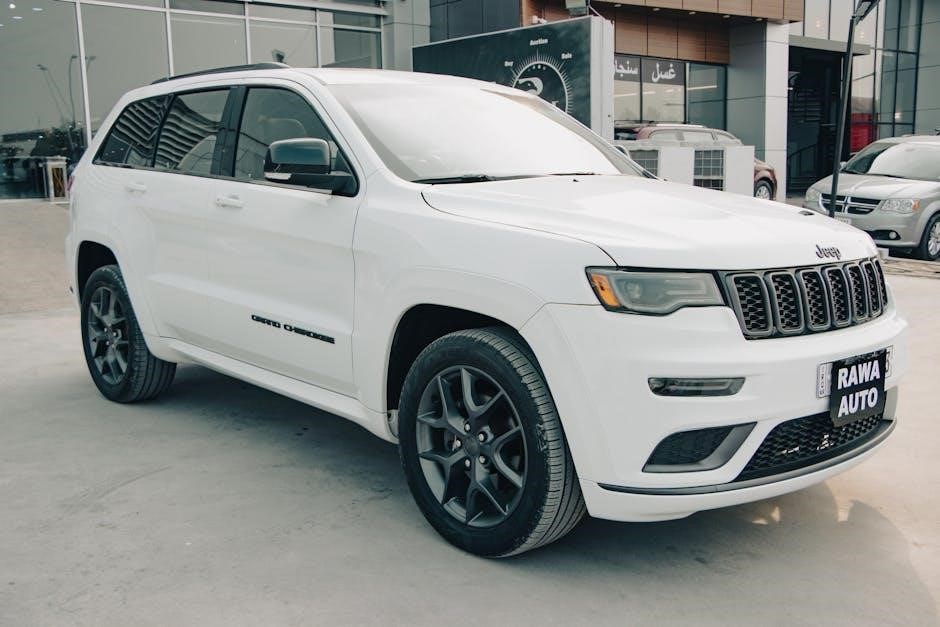
The 2004 Jeep Grand Cherokee represents a blend of rugged capability and refined comfort, establishing itself as a popular SUV choice. This vehicle offers a range of engine options, including inline-six and V8 configurations, catering to diverse driving needs. It features a robust four-wheel-drive system, enhancing traction and off-road performance. Interior amenities prioritize passenger comfort, with available leather seating and advanced entertainment systems.
Understanding its features, from the cooling system to the electrical components, is crucial for optimal ownership. This manual serves as a guide to maximizing the vehicle’s potential and ensuring long-term reliability.
Importance of the Owner’s Manual
This owner’s manual is your comprehensive resource for the 2004 Jeep Grand Cherokee, vital for safe and efficient operation. It details everything from starting procedures and driving techniques to understanding the instrument panel and performing essential maintenance. Ignoring the manual can lead to improper vehicle use, potentially causing damage or compromising safety features like the airbag and ABS systems.
Familiarizing yourself with the warranty information and troubleshooting guides ensures you receive the full benefit of your vehicle and address any issues promptly. It’s a key to responsible ownership.
Understanding Your 2004 Jeep Grand Cherokee
Locate your Vehicle Identification Number (VIN) for decoding crucial vehicle specifics, alongside key features and detailed specifications for optimal performance.
Vehicle Identification Number (VIN) and Decoding
The 17-character Vehicle Identification Number (VIN) is crucial for identifying your specific 2004 Jeep Grand Cherokee. It’s typically located on the driver’s side dashboard near the windshield, and also on vehicle registration documents.
Decoding the VIN reveals vital information about the vehicle’s origin, manufacturing details, engine type, model year, and assembly plant. Online VIN decoder tools are readily available to translate these characters into understandable data. This information is essential for ordering correct parts, checking vehicle history reports, and verifying warranty coverage. Understanding your VIN ensures accurate service and maintenance throughout the vehicle’s lifespan.
Key Features and Specifications
The 2004 Jeep Grand Cherokee offered a range of features, including available four-wheel drive systems (Quadra-Trac I & II), multiple engine options – a 3.7L V6 and 4.7L V8 – and varying trim levels like Laredo, Limited, and Overland.
Standard features often included air conditioning, power windows and locks, and a CD player. Higher trims boasted leather interiors, premium sound systems, and advanced safety technologies. Key specifications encompass a wheelbase of 109.5 inches, a length of 188.4 inches, and a towing capacity reaching up to 6,500 pounds depending on configuration;
Operating Your Vehicle
Familiarize yourself with all controls and indicators before driving. Safe operation requires understanding the vehicle’s features and adhering to traffic laws.
Starting and Stopping Procedures
To start your 2004 Jeep Grand Cherokee, ensure the vehicle is in Park or Neutral. Fully depress the brake pedal, then turn the ignition key to the ‘Start’ position, releasing it once the engine engages.
For a smooth stop, gently apply the brake pedal, increasing pressure as needed. Avoid abrupt braking unless in emergency situations. Once stopped, shift the transmission into Park and engage the parking brake.
Always double-check your surroundings before starting or stopping, and be mindful of pedestrians and other vehicles. Proper procedures contribute to safe operation and longevity of the vehicle.
Driving Techniques and Safety
Safe driving with your 2004 Jeep Grand Cherokee requires attentiveness and adherence to traffic laws. Maintain a safe following distance, adjusting for weather and road conditions. Anticipate potential hazards and react accordingly.
When cornering, reduce speed and steer smoothly. Avoid sudden maneuvers. Utilize turn signals well in advance of lane changes or turns. Be especially cautious when driving in adverse weather, such as rain or snow.
Always wear seatbelts, and ensure passengers do the same. Never drive under the influence of alcohol or drugs. Prioritize defensive driving techniques for a secure journey.
Understanding the Instrument Panel
The 2004 Jeep Grand Cherokee’s instrument panel provides crucial vehicle information. The speedometer displays your speed, while the tachometer indicates engine RPM. Fuel level and engine temperature gauges are prominently featured.
Warning lights alert you to potential issues – check engine, ABS, airbag, and low fuel. The odometer shows total mileage, and a trip odometer allows tracking of individual journeys.
Familiarize yourself with each indicator’s meaning. Consult the owner’s manual for detailed explanations of all symbols and functions. Regular monitoring ensures timely attention to vehicle needs.

Maintenance and Service
Regular maintenance, as outlined in this manual, is vital for your 2004 Jeep Grand Cherokee’s longevity and optimal performance.
Recommended Maintenance Schedule
Maintaining your 2004 Jeep Grand Cherokee requires adherence to a specific schedule for optimal performance and reliability. This schedule, detailed within this manual, outlines crucial inspections and services at various mileage intervals.
Key services include oil and filter changes, fluid level checks (coolant, brake, power steering, transmission), tire rotations, and inspections of belts, hoses, and brakes. More extensive services, like spark plug replacement and timing belt checks, are recommended at higher mileage points.
Following this schedule proactively prevents potential issues, extends the vehicle’s lifespan, and ensures a safe driving experience. Consult the detailed chart within the manual for precise intervals and service requirements tailored to your driving conditions.
Fluid Checks and Replacements
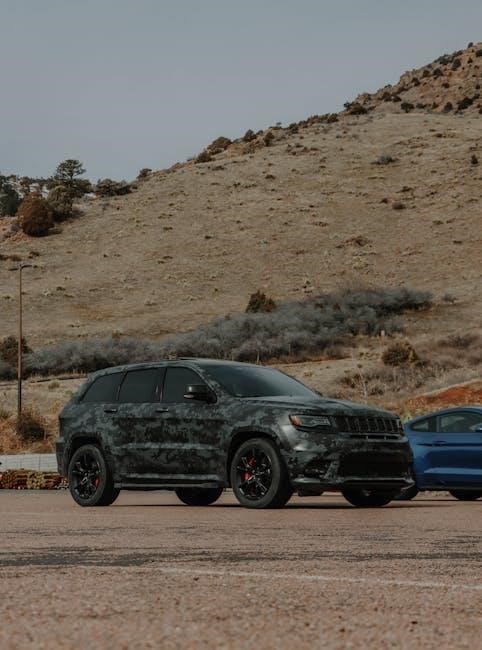
Regularly checking and replacing fluids is vital for the health of your 2004 Jeep Grand Cherokee. This manual details the procedures for inspecting and maintaining essential fluids, including engine oil, coolant, brake fluid, power steering fluid, transmission fluid, and windshield washer fluid.
Low fluid levels can lead to component damage and reduced performance. The manual specifies the correct fluid types and capacities for your vehicle. Replacement intervals vary based on driving conditions; however, consistent monitoring is crucial.
Proper fluid maintenance ensures optimal lubrication, cooling, and hydraulic function, contributing to a longer vehicle lifespan and a safer driving experience.
Tire Maintenance and Rotation
Maintaining proper tire pressure and condition is crucial for safety and performance of your 2004 Jeep Grand Cherokee. This manual outlines recommended tire pressures for various driving conditions, found on the vehicle’s tire placard.
Regularly inspect tires for wear, damage, and uneven tread. Tire rotation, typically every 5,000-8,000 miles, promotes even wear, extending tire life and improving handling.
The manual details the correct tire rotation pattern for your vehicle. Proper alignment is also essential; address any steering or handling issues promptly to prevent premature tire wear.
Troubleshooting Common Issues
This section assists in diagnosing frequent problems with your 2004 Jeep Grand Cherokee, offering guidance for engine, transmission, and brake system concerns.
Engine Problems and Diagnostics
Addressing engine issues in your 2004 Jeep Grand Cherokee requires a systematic approach. Common problems include rough idling, misfires, and a loss of power. Begin by checking for obvious signs like fluid leaks or damaged wiring.
Utilize an OBD-II scanner to retrieve diagnostic trouble codes (DTCs), which pinpoint specific areas of concern. These codes can indicate faulty sensors, ignition system failures, or fuel delivery problems. Refer to the manual’s code interpretation guide for detailed explanations.
Inspect spark plugs, ignition coils, and fuel injectors for wear or damage. A compression test can reveal internal engine issues. Always prioritize safety when working on the engine, disconnecting the battery before performing any repairs.
Transmission Issues
The 2004 Jeep Grand Cherokee’s transmission can experience several issues, including slipping gears, harsh shifting, or a complete failure to engage. Regularly check the transmission fluid level and condition; low or burnt fluid is a common culprit.
Look for leaks around the transmission pan and seals. Diagnostic trouble codes (DTCs) retrieved via an OBD-II scanner can help pinpoint internal problems, such as solenoid failures or valve body malfunctions.
Avoid aggressive driving and ensure proper towing practices to prevent transmission damage. If issues persist, professional diagnosis and repair are recommended, as transmission work can be complex.
Brake System Concerns
Several brake system issues can arise in the 2004 Jeep Grand Cherokee. Common concerns include spongy brake pedal feel, squealing or grinding noises during braking, and pulling to one side. Regularly inspect brake pads, rotors, and lines for wear and damage.
Check the brake fluid level and ensure it’s within the specified range; low fluid may indicate a leak. The Anti-lock Braking System (ABS) may trigger warning lights if sensors are faulty or the system malfunctions.
Proper brake maintenance is crucial for safety; address any concerns promptly with a qualified mechanic.
Detailed System Information
This section offers in-depth explanations of the 2004 Jeep Grand Cherokee’s complex systems, including cooling, electrical, and four-wheel drive operations.
Cooling System Overview
The 2004 Jeep Grand Cherokee’s cooling system is crucial for maintaining optimal engine temperature. It comprises a radiator, water pump, thermostat, and coolant hoses. The radiator dissipates heat from the coolant, while the water pump circulates it throughout the engine block.
The thermostat regulates coolant flow, ensuring the engine reaches operating temperature quickly and prevents overheating. Regularly inspect hoses for leaks or cracks, and monitor coolant levels. Proper coolant mixture (50/50 antifreeze and water) is vital for freeze protection and corrosion prevention. A malfunctioning cooling system can lead to severe engine damage, so prompt attention to any issues is essential for vehicle longevity.
Electrical System Basics
The 2004 Jeep Grand Cherokee’s electrical system powers various components, including the engine, lights, and accessories. It centers around the battery, alternator, and a network of wiring harnesses. The battery provides initial power, while the alternator recharges it during operation.
Fuses protect circuits from overloads, and the Totally Integrated Power Module (TIPM) manages many electrical functions. Understanding basic electrical concepts, like voltage and amperage, is helpful for troubleshooting. Always disconnect the negative battery cable before working on electrical components to prevent shorts. Regular inspection of wiring and connections ensures reliable system performance and prevents potential hazards.
Four-Wheel Drive System Operation
The 2004 Jeep Grand Cherokee offers several four-wheel drive (4WD) options, including 4-Hi and 4-Lo, designed for varying terrain conditions. 4-Hi is suitable for slippery roads like snow or gravel, providing enhanced traction. 4-Lo delivers maximum torque for challenging obstacles like steep hills or deep mud.
The system utilizes a transfer case to distribute power to all four wheels. Engaging 4WD requires understanding the vehicle’s limitations and appropriate usage. Avoid using 4WD on dry pavement, as it can cause drivetrain binding. Regular inspection of the 4WD components ensures optimal performance and longevity, especially before off-road adventures.

Safety Features and Systems
Your 2004 Jeep Grand Cherokee includes vital safety systems like airbags and ABS, designed to protect occupants during collisions and enhance vehicle control.
Airbag System Details
The 2004 Jeep Grand Cherokee’s airbag system is a crucial safety component, featuring advanced sensors strategically placed throughout the vehicle. These sensors detect impacts and deploy airbags rapidly, minimizing injury risk. Front airbags protect the driver and front passenger, while side airbags offer additional protection during side collisions.
It’s essential to understand that airbags deploy with significant force. Always wear seatbelts, as they work with airbags for optimal safety. Never place objects between you and the airbag, and children should be properly restrained in the rear seat. Regular inspection of the airbag system is recommended to ensure proper functionality.
Anti-lock Braking System (ABS)
The 2004 Jeep Grand Cherokee is equipped with an Anti-lock Braking System (ABS) designed to enhance control during hard braking and slippery conditions. ABS prevents wheel lockup, allowing you to steer while braking. When ABS activates, you’ll feel a pulsing sensation in the brake pedal – this is normal and indicates the system is working.
Maintain firm, steady pressure on the brake pedal during ABS activation. Do not pump the brakes. The system automatically modulates brake pressure to each wheel individually. Regular checks of the ABS system, including the warning light on the instrument panel, are vital for ensuring optimal performance and safety.

Warranty Information
Your 2004 Jeep Grand Cherokee originally came with a factory warranty; however, coverage may have expired. Extended warranty options might be available.
Original Warranty Coverage
The original warranty for your 2004 Jeep Grand Cherokee typically included a 3-year/36,000-mile bumper-to-bumper coverage, protecting against defects in materials and workmanship. Additionally, a 5-year/60,000-mile powertrain warranty covered the engine, transmission, and drivetrain components.
Rust coverage varied by region, and emissions components often had longer warranties dictated by federal and state regulations. It’s crucial to remember that these warranties are based on the vehicle’s in-service date and mileage.
Most original warranties have now expired, but documentation like the original owner’s manual or dealership records can confirm specific coverage details.
Extended Warranty Options
Although the original warranties for a 2004 Jeep Grand Cherokee have likely expired, several extended warranty options may still be available. These typically come from third-party providers, offering varying levels of coverage – from basic powertrain plans to comprehensive bumper-to-bumper protection.
Popular providers include companies specializing in vehicle service contracts. Carefully review the terms and conditions, including deductibles, exclusions, and claim procedures, before purchasing.
Consider the vehicle’s condition and your budget when selecting a plan. A pre-purchase inspection can help identify potential issues and inform your decision regarding extended warranty coverage.